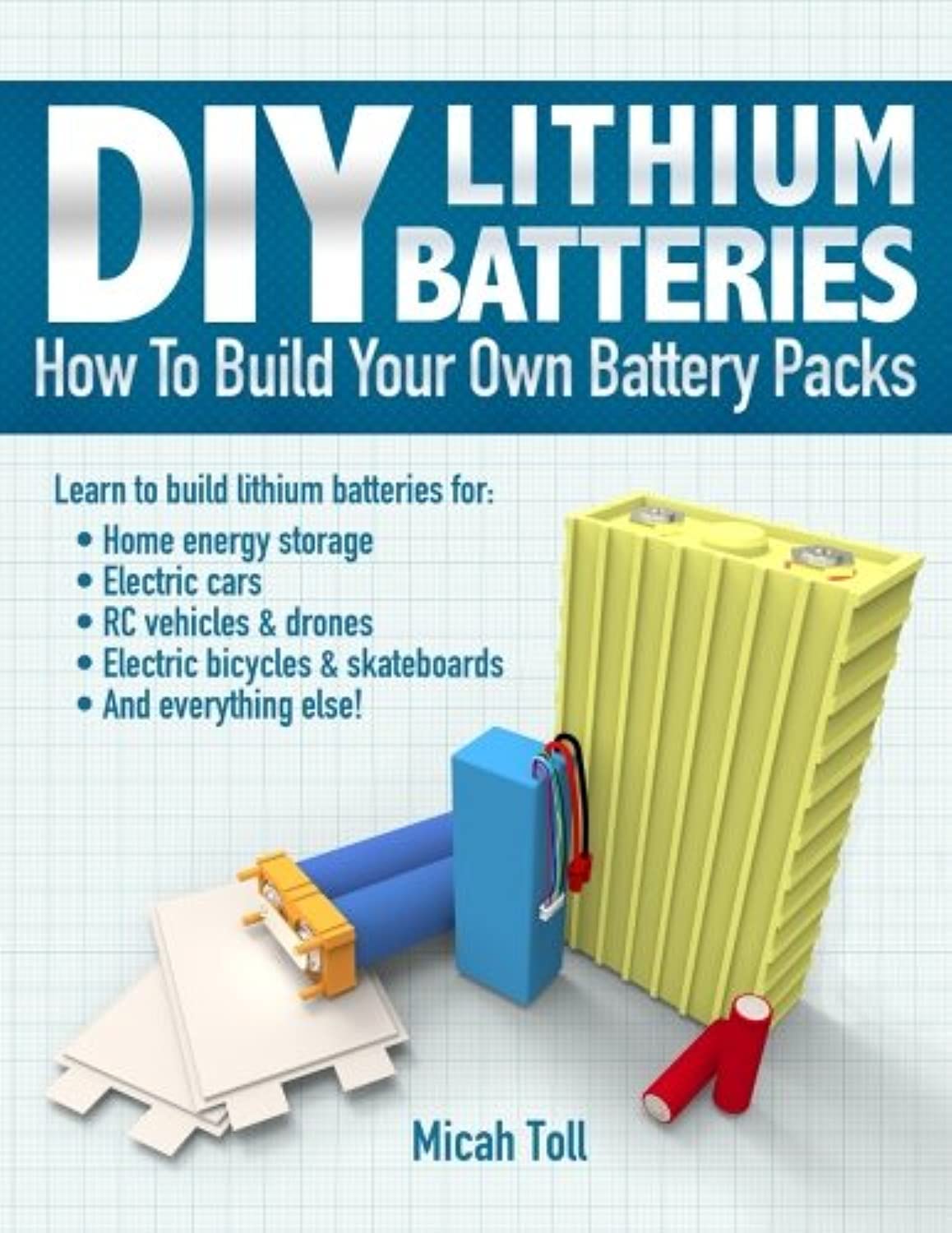
DIY Lithium Batteries How to Build Your Own Battery Packs
get any
Free ebooks from Code With OJ
Uses for lithium batteries
Today, lithium batteries are used for a seemingly endless number of applications. They can be found everywhere from electric vehicles to NASA’s spacesuits. Due to their lightweight and energy dense properties, lithium batteries are perfect for an incredibly wide range of applications.
In the past, lithium batteries were mostly used by original equipment manufacturers (OEMs) for use in consumer products. These big manufacturers built lithium batteries suited to their needs for specific products or large clients. If a hobbyist wanted a battery size or shape that didn’t exist, he or she was out of luck. However, today there are many lithium batteries and cells that are readily available directly to consumers for use in, well, whatever we want!
I was introduced to the world of custom lithium batteries during my time spent working in the do-it- yourself (DIY) electric bicycle industry. I have been building lithium batteries for electric bicycles for years, largely because the number and variety of lithium batteries available to the consumer market has always been frustratingly small. If I wanted a specific size battery pack but it didn’t already exist, I had no other choice than to make it myself. This opened up a whole new world to me. Suddenly, I could build batteries of any voltage, any capacity and most importantly, any size and shape that I wanted.
Form factors of lithium cells
Lithium battery cells are available in a number of different form factors, yet their underlying construction is always the same. All lithium battery cells have a positive electrode (cathode), a negative electrode (anode), an electrolyte material and some type of porous separator in between that allows lithium ions to move between the cathode and the anode. We’ll talk about how changes in the chemistry of different li-ion cells can affect them in the next chapter. For now, the main difference between various shapes of lithium cells is the way they are assembled.
FLithium polymer (li-poly or lipo or RC lipo)
There’s an immense amount of confusion out there regarding lithium polymer batteries. This is mostly because the cells that the term was originally created for and the cells that most people today call lithium polymer cells are not the same thing. Remember when we discussed how lithium cells are made? How they have an anode, a cathode, and a liquid or more commonly gelled electrolyte material in between the two? Right. So the original term “lithium polymer battery” referred to a new type of lithium cells that used a solid (sometimes referred to as “dry”) electrolyte instead of the common liquid or gelled electrolyte. The solid electrolyte used in these experimental cells was a polymer, or plastic material, giving rise to the name “lithium polymer battery”. This new technology for dry electrolyte batteries promised incredibly safe batteries. However, it never made it out of the laboratory on any large scale. The problem was that the dry electrolyte didn’t conduct electricity very fast at ambient temperature. That meant that the batteries had to be constantly heated to function properly. This was obviously a deal breaker for most applications. Who wants a big heater built into their cell phone or laptop? So the original lithium polymer batteries never really went anywhere. The problem with the name began when some manufacturers started referring to other cells that had a polymer packaging, namely pouch cells, as “lithium polymer” cells. This became confusing, as these cells didn’t really have polymer electrolytes, but instead had their liquid electrolytes gelled with the use of an external polymer. These should really be called “lithium-ion polymer” cells to distinguish them from the original, non commercialized “lithium polymer” cells. However, once people started calling them lithium polymer cells, the confusion began. But the confusion doesn’t stop there! Because what people began calling lithium polymer batteries (which were actually lithium-ion polymer batteries in pouch cell formats) are actually nearly identical to the standard lithium-ion batteries that already existed. They have the same or similar cathode and anode materials and similar amounts of electrolyte. The main difference is that lithium-ion polymer batteries use a micro-porous electrolyte instead of the normal porous separator layer placed in the electrolyte of li-ion cells. That means that all “lithium-ion polymer” and “lithium-ion” batteries available today are technically li-ion batteries. They’re all similar and they all function by transporting lithium ions back and forth through an electrolyte. But the term “lipo”, which is short for lithium polymer, has now commonly been used to refer to the shape and style of cells, namely pouch cells whose pouches are technically a polymer material. Because this use of the term “lipo” took off, many people now think that a lipo cell is another name for a pouch cell. In fact, a pouch cell is simply a type of battery cell structure and it can be used to make li-ion, LiFePO4 or potentially other new chemistries in the future. So “pouch cell” describes the shape, not the chemistry. But now everyone seems to be running around referring to pouch cells as “lipos”. Lastly, there is an entire class of li-ion cells used for radio controlled (RC) toys and vehicles that are generally referred to as lipo batteries. These are extremely high power li-ion cells that are specifically used in the RC industry for their ability to provide the highest possible current. The most common usage of the term lipo nowadays is to refer to these RC batteries. For that reason, in the remainder of this book, I will refer to these high power RC batteries as “RC lipo” batteries. This is not the original historical use of the term lithium polymer, but it is the commonly used convention today and thus it is how I will use it. When in Rome... But please be aware that there is much confusion in the industry regarding the terms lithium polymer, li- ion and lipo. For our purposes, “RC lipo” will refer to li-ion batteries specifically designed for RC purposes, and all other lithium ion batteries will be referred to as li-ion. I won’t use the term lithium polymer as any cell on the market being called “lithium polymer” today is really just lithium ion, and the real “lithium polymer” cells never really made it out of the lab. Phew! Ok, I’m sorry that took so long, but it’s important to point out the confusion and try to make sense of it. Now let’s move on to actually learning about RC lipo batteries. Which should be fun, because these are the ones that go kaboom when you mess up with them. Let’s get this out of the way immediately: RC lipo batteries are the dangerous ones. These are the ones that are itching to burn your house down if you don’t follow proper charging and discharging procedures. They can be safe, but they are also incredibly volatile when used improperly. Alright, now that we’ve got that out of the way, let’s look at what makes RC lipo batteries special. RC lipo cells are a specialty chemistry based on lithium cobalt that is suited for high power applications. They can provide super high discharge rates for long periods of time, and insanely high discharge rates for short periods (before they overheat and we get back to that unfortunate fire scenario I warned you about). RC lipo cells are almost exclusively used in the remote control vehicle industry for applications such as RC drones, helicopters, planes, cars, etc. These devices require very high discharge rates from a small and lightweight battery. RC lipo cells aren’t the lightest cells (those are variants of conventional li-ion cells), but they can provide much higher power for only a slightly higher weight. RC lipo cells are also the cheapest lithium cells available. They cost much less than li-ion and LiFePO4 cells (we’ll learn about LiFePO4 shortly), making them attractive for other applications that make use of DIY batteries, such as electric bicycles. One major drawback (besides the fact that RC lipo are basically little bombs that can also power electronics) is that RC lipo cells have very short cycle lives. Reaching 200 cycles on a RC lipo cell would be considered fairly good performance. Some RC lipos can be pushed closer to 300 cells, but don’t last as long as li-ion cells and can’t even come near LiFePO4 cells. (Note: these cycle counts are based on complete charging and discharging cycles. We’ll talk about how partial charging and discharging can extend the life of nearly all types of lithium battery cells.) Another issue with RC lipo cells is their more complicated charging process. While li-ion and LiFePO4 cells are pretty easy to charge, especially when using a battery management system (BMS), RC lipo cells require more expensive balance chargers to ensure that all cells in a battery are maintained at the proper voltage and balanced with one another. The reason for this is that when RC lipo batteries stray from their rated voltage range, they become incredibly volatile. Do a quick search on YouTube for “overcharging RC lipo cell” to get an idea of what I mean. It is critically important that RC lipo cells are charged within their specified voltage range. They should also never be discharged too low. Discharging a RC lipo cell below 2.5 volts and then charging the cell can result in combustion of the cell, especially at higher charging currents. For this reason, RC lipo cells must be monitored carefully during discharge as well to ensure that they are never drained too far. It is possible to recharge RC lipo cells that have been over discharged, but it must be done at very low currents and can easily result in fire, depending how damaged the battery cell was. Ideally this wouldn’t be attempted, but if it was, it should be done in a monitored environment and away from anything flammable. RC lipo cells are electro-chemically similar to li-ion cells, and have a nominal voltage of 3.7 V. However, because care must be taken not to over-discharge the cells, it is not recommended to discharge them lower than 3.0 V. Aiming for a higher voltage of 3.2 V is considered safer. In the RC aircraft field, many pilots will stop flying when a battery reaches as high as 3.5 V, thus maintaining a larger safety margin. The maximum voltage of RC lipo cells should never exceed 4.2 V. It should also be noted that these voltages are considered the “under load” voltage. Depending on the current load, a lithium battery cell (of any chemistry) will see a drop in voltage. This drop in voltage is known as voltage sag. An RC lipo cell should never drop below 3.0V while in use. If discharging stops at 3.0 V under load, the voltage when measured after the load is removed will return to a higher voltage, likely in the 3.3 V - 3.5 V range, though an even safer level for at rest voltage is around 3.7 V. For this reason, it is critically important to monitor RC lipo cells under load to ensure they never over-discharge beyond a safe limit.
Lithium Iron Phosphate (LiFePO4)
Lithium iron phosphate is technically a subset of the more general li-ion class, but it is unique enough that it is often listed separately. LiFePO4 cells are both heavier and less energy dense than most li-ion cells. This means that battery packs built from LiFePO4 cells will be bulkier and more massive than li-ion or RC lipo batteries of the same voltage and capacity. The exact amount varies depending on the cell format, but you can expect a LiFePO4 battery to be around twice as large and twice as heavy as a comparable li-ion battery. LiFePO4 cells are also some of the most expensive cells. Their cost varies based on many factors including cell size, format, vendor and location, but you can expect to pay around 20% more for LiFePO4 cells than for li-ion cells of the same capacity. Most commonly available LiFePO4 cells also have a lower discharge rate, meaning they can’t provide as much power, though this isn’t always the case. Some cells, such as those made by the high quality battery company A123, can provide high power levels but cost a premium and are hard to source. Those are mostly sold to OEMs for use in consumer products like power tools. It is common to hear LiFePO4 being touted for its high discharge rate, but unless you source LiFePO4 cells that are specifically designed for high discharge, most LiFePO4 cells have relatively low discharge rates. With all of these downsides, why would someone want to use LiFePO4 cells? There are actually two big advantages for using LiFePO4 - cycle life and safety. LiFePO4 have the longest rated cycle life of all commonly available lithium battery cells. They are often rated for over 2,000 cycles. They are also the safest lithium battery chemistry available. While fires from LiFePO4 cells have been documented, they are incredibly rare. The electrolyte used in LiFePO4 cells simply can’t oxidize quickly enough to combust efficiently and requires exceedingly high temperatures for thermal runaway, often higher than the combustion temperature of many materials. So when should you use LiFePO4 cells? The best applications for LiFePO4 cells are projects that require long cycle lives and high safety, don’t have critical space or weight limitations, and don’t require very high levels of power (unless you specifically source high power LiFePO4 cells). LiFePO4 cells have a nominal voltage of 3.2 V per cell and a discharge-charge voltage range of 2.5 V - 3.65 V. Just like with li-ion cells, discharging below 2.5 V will cause irreparable damage to the cell, though it isn’t necessarily dangerous, like in the RC lipo cells that we just learned about.
Buying new cells
The first method, and the one I generally recommend, is to buy new cells from established vendors. Lithium battery cells are not cheap, but by buying new cells, you’ll be sure that you’re getting high quality, safe cells that will last as long as you expect them too. That might be a few hundred cycles or a few thousand, depending on the type of cells, but at least you aren’t likely to have any surprises. Depending where you live, you might not have a good local source for buying lithium batteries. Don’t worry though - there are many sources to buy lithium batteries online. For years, lithium batteries were almost exclusively made in Asia, meaning that the best method to buy cells was to pay a stranger online and wait a month for them to arrive in the mail. Now there are an increasing number of resellers in countries around the world, making it easier to deal with a vendor that is at least located in the same country, even if they aren’t local to your area. I still mostly buy my battery cells straight from China, where you can usually get the best price. If you’re buying small cells, like RC lipo packs or 18650 batteries, then buying online from halfway around the world can be a good option. Such lithium cells are usually small and can be shipped easily and cheaply. However, the constantly changing shipping regulations for lithium batteries might not make this true forever. I generally buy boxes of 18650 cells by the hundred, which usually results in a pretty significant price reduction of around 10-30% compared to buying single 18650 cells. A couple of the most common sources I use for buying smaller lithium battery cells are Alibaba and their retail division AliExpress. Alibaba is good for wholesale purchases where you’ll be buying 100+ cells, though some vendors on Alibaba don’t want to sell quantities of less than 1,000 cells. On AliExpress, you can buy cells anywhere from single units up to many thousands. Always look for a vendor that has been in business for at least a few years and has lots of feedback ratings. It’s true that good feedback can be bought or faked, but generally these vendors are selling in high enough volume that any bad feedback will still make it through. Vendors with hundreds of transactions and generally positive feedback are usually good sources. There is a very large industry of fake lithium cells, which are usually off-brand cells that have been rebadged to look like brand name cells. When buying directly from Asia, it can be harder to determine if the vendor is selling genuine or counterfeit cells. Only buying from reputable vendors with years of good feedback helps stack the odds in your favor, but it’s still hard to be 100% sure. Online forums for people building similar projects as you (such as electric bicycle or DIY powerwall forums) often have large communities that can help you find the most trustworthy dealers used by members of that industry. If you’re really worried about getting bad or fake cells, order just a few cells at first to test the vendor. That way you don’t commit to a large order from a new vendor only to later find out that the cells aren’t good. You could also consider just going with a local vendor that guarantees the authenticity of the cells they provide. It will be more expensive, but you can be sure that you’re getting the right cells, and you’ll presumably have recourse if you don’t get what you paid for. If you’re buying large cells, such as those used in many electric vehicle conversions, your sources are going to be more limited. Most commonly available lithium batteries come in small form factors. Big cells exist, but there are fewer manufacturers and vendors. You’ll likely do better by looking for a vendor in your country that can import large lithium cells directly for you. You can always use many small cells (Tesla electric vehicles have thousands of small cells), but for big projects like electric vehicle conversions or very large home energy storage batteries, large cells can save you a lot of work in the assembly phase. Lastly, if you are going to spend the money to buy new cells, you should only buy name brand cells made by recognizable companies like Panasonic, Samsung, Sony, LG, etc. There are a number of off brands out there that sell cheaper lithium cells, but they don’t have the same quality as the big players. In the thousands of Panasonic and Samsung cells that I’ve purchased over the years, I’ve never once gotten a bad cell. The name brand companies all have excellent quality control. They test and remove any bad cells at the factory before shipment. Other companies have lower standards, and it’s not uncommon to get a bad cell or two in a shipment of a few hundred. While this might seem negligible, it can actually have a devastating effect if you’re building a large battery. A single weak cell can end up dragging down an entire parallel group connected to it, ruining many more cells. There are also several brands of cells that simply buy rejected cells from the big companies and repackage them with ridiculously overrated specifications. Ultrafire is the poster child for this practice, but other brands such as Trustfire, Surefire and others do the same thing. If you see cells that are cheaper than name brand yet claim to have higher capacities, you can be sure they aren’t legitimate cells. If it sounds too good to be true, it probably is.
Form factors of lithium cells
Lithium battery cells are available in a number of different form factors, yet their underlying construction is always the same. All lithium battery cells have a positive electrode (cathode), a negative electrode (anode), an electrolyte material and some type of porous separator in between that allows lithium ions to move between the cathode and the anode. We’ll talk about how changes in the chemistry of different li-ion cells can affect them in the next chapter. For now, the main difference between various shapes of lithium cells is the way they are assembled.
Aurther
Micah Toll
Downlaod Book